
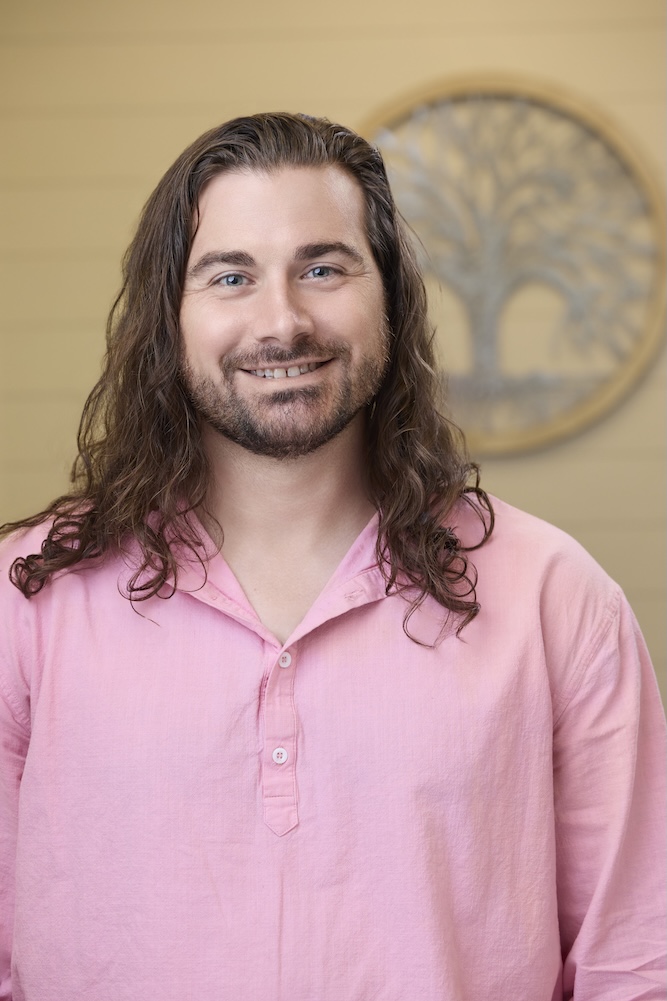
Life can be chaotic, messy, unpredictable, and sometimes downright overwhelming. I don’t believe therapy makes the chaos disappear. What it can do is help you understand yourself more deeply, recognize the strengths and resources you already possess, and develop a greater sense of steadiness within yourself when life around you doesn’t feel particularly steady.
I especially enjoy working with adolescents and young adults, roughly ages 10 to 30, and have a particular passion for helping clients with ADHD, autism spectrum disorder (ASD), neurodivergence, anxiety, and emotional dysregulation. These years involve tremendous growth in identity, relationships, independence, and the way we understand ourselves and the world around us. Sometimes relatively small shifts in awareness or perspective during this stage of life can have an enormous impact on what comes next.
As a neurodivergent person myself, I have a personal appreciation for the fact that different brains experience and navigate the world differently. My goal isn’t to force someone into a particular definition of “normal.” I want to understand how your mind works, what overwhelms you, what helps you regulate, where you thrive, and what practical strategies might make life work better for you.
My style in the therapy room is warm, highly relational, exploratory, practical, and usually pretty lighthearted. I value humor and want you to be able to relax and be yourself with me. But when something important shows up, I’m comfortable going directly toward it. We may slow down, dig into what’s happening, and stay with a difficult emotion or pattern long enough to understand what is really underneath it. I also care about helping you leave the session feeling grounded rather than opening something difficult and simply sending you out the door with it.
My therapeutic approach draws from Person-Centered and Adlerian Therapy, Family Systems Therapy, Acceptance and Commitment Therapy (ACT), Cognitive Behavioral Therapy (CBT), and mindfulness-based approaches. Depending on what you need, our work may involve developing concrete coping skills, learning to relate differently to difficult thoughts and emotions, exploring family or relationship patterns, increasing self-awareness, or figuring out how to live more consistently with what matters most to you.
I also bring significant experience working with people during some of life’s most difficult moments. I spent several years providing grief counseling in a hospice setting, which gave me extensive experience supporting individuals and families navigating grief, loss, death, and major life transitions. I have also provided crisis stabilization counseling on a child and adolescent psychiatric unit, working with young people experiencing serious psychological distress, including suicidal thoughts and self-harm urges. Those experiences have made me comfortable sitting with emotions and experiences that can feel frightening, intense, or difficult to talk about.
Another important part of my background is my training and work in spiritual care. I earned my Master of Divinity from Emory University and completed Clinical Pastoral Education, with experience serving as a hospital and hospice chaplain. I have accompanied people through questions of faith, loss of faith, religious and spiritual trauma, faith transitions, and deconstruction. If spirituality is important to your story, there is room to explore it in therapy—including anger, doubt, uncertainty, or complicated feelings about religion. My role isn’t to determine where you should land. It’s to help you explore what your experiences mean to you.
I believe every person is of sacred worth and possesses strengths, resilience, and the capacity for growth. I don’t see my role as standing outside your life and telling you how to fix it. I want to come alongside you, help you discover what is already within you, and develop the awareness and skills that allow you to navigate what comes next.
I am a Licensed Associate Professional Counselor (LAPC) and earned my Master’s degree in Clinical Mental Health Counseling from the University of the Cumberlands, in addition to my Master of Divinity from Emory University. I currently practice under the supervision of Julie Evans, LPC, CPCS.
You don’t have to get your life under control before coming to therapy. Life is messy for all of us. We can start in the middle of that mess and work together to help you understand yourself, recognize what you need, and create a greater sense of safety and steadiness even when everything around you isn’t calm.
Outside the therapy room, family is everything to me, and I feel most alive when I’m challenging myself physically and mentally. I love outdoor adventures with my family and my dog, Ruthie. On the weekends, you might find me kayaking, running an obstacle course race, or rollerblading with Ruthie—which probably tells you something about both of us.